[1]Facebook and MySpace: both are online social networks, but do they really connect people? Yes and No. Most online users argue that both sites keep people connected through photos, messages, and “interactions” like group invites. But at the same time, both sites create an invisible but real communication barrier by limiting face-to-face interactions. A photo accompanied by text can never be the same as actually seeing someone or even hearing his or her voice. Of course, the accompanying image with the text is better than only text. Still a message or email does not expand our sympathetic imagination or allow us to temporarily enter into complete unity of understanding with another person. This conflict between the sympathetic imagination and technological communication is bridged, however, in Second Life avatars. With them, we can act almost completely human and even display leadership. The technology allows a performance that, I believe, only very skilled actors achieve. An actor must identify with their characters just as a person behind the avatar must emulate a personality. Can technology, therefore, motivate and inspire leadership? Despite the technological stress incurred, the process of creating avatars in Second Life allowed me to explore the personality of my role model, Mary Kay Ash, expand upon my understanding of leadership, and ultimately inspire writing based upon passion rather than fear.
Mary Kay Ash’s embodied the example of an ideal leader by maintaining her balance, enthusiasm, and passion. I admire that she took initiative and successfully started an international company despite her downtrodden past. Mary Kay instilled in both her life and career, not only balance, but also morality and respect for others by following the Golden Rule. She lead by using her enthusiasm, respect, and verbal and written communication to empower the lives of her employees and many other individuals. I often have trouble balancing my time and various aspects of life such as work and play, and Mary Kay’s business philosophy and life motto encourage me to maintain a balance. She encourages me to put my work in perspective, to focus on God and family. Thus, Mary Kay is Golamenatal’s idea of a visionary leader “by continually reminding people of the larger purpose of their work”[2].
Despite my respect for Mary Kay Ash as a role model, I experienced much initial stress in creating an Avatar of her in Second Life. I am not one to play video games—online or on a television set—and technology often monopolizes my time by creating problems such as a destroyed computer hard drive or simply a malfunctioning online homework service. So, naturally, I experienced some anxiety in being graded on my ability to create and use a video game character. My first technological issue surfaced almost immediately when I attempted to download the Second Life software onto my Window’s Vista operating system. When the Second Life program opened on my computer, a warning message would appear on my screen and exit me out of the game. Apparently others using Second Life experienced this same problem, but they were able to fix it by changing certain settings. Unfortunately the changes did not remedy my problem, so I resorted to borrowing friends’ computers or waiting for half an hour each time I downloaded the program onto a computer in a lab.

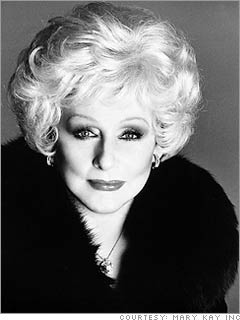
Once I got on to Second Life, however, the orientation and subsequent creation of my avatar was surprisingly easy and taught me in an unconventional way. The virtual world of Second Life captivates its users with the realness of movement and terrain. I enjoy that Second Life takes advantage of the online world and adds features that we can only dream of in the real world such as the ability to fly and instantly transport to another location. After exploring these exciting features of the virtual world, I finally started the fun task of creating Mary Kay. Choosing her outfit and styling her hair were like playing with dolls as a child; except, this time, I was allowed to mold and sculpt her exactly the way I wanted. During this process, I noticed that as I paid more attention to Mary Kay’s appearance I learned more about her personality. That may sound superficial, as if I  am judging character by looks, but I believe the way people hold themselves, the expressions they display, and the clothes they wear in public tell us about their personality. Looking at photos of Mary Kay I found that she was a confident and strong woman. She wore powerful tailored suits, flaunted her femininity, gazed with an authoritative but friendly stare, and occasionally had a twinkle in her eye (see image 2)[3]. By creating a virtual Mary Kay Ash, I embarked upon an excursion into her mind to decide what she would choose and how she would act.
 am judging character by looks, but I believe the way people hold themselves, the expressions they display, and the clothes they wear in public tell us about their personality. Looking at photos of Mary Kay I found that she was a confident and strong woman. She wore powerful tailored suits, flaunted her femininity, gazed with an authoritative but friendly stare, and occasionally had a twinkle in her eye (see image 2)[3]. By creating a virtual Mary Kay Ash, I embarked upon an excursion into her mind to decide what she would choose and how she would act.
 (In the midst of conversation. I am center as the male although my true avatar is female)
Acting as Mary Kay in conversations in Second Life forced me to further explore her mind to understand her character and leadership, yet, at first, I encountered further technological frustration when I found that I could not enter into the chat area. Since I had created two different avatars with two different names, the program would not allow my second avatar- the Mary Kay one- into the area. Racing among computers to remedy this problem, I felt my stress level rise as I feared that I would not be able to participate in the leadership discussions. In the end, though, my first avatar could enter the chats, so I entered the conversations as a young male but acted as the older, and female, Mary Kay Ash (see above picture). Entering my first conversation late, I especially felt the confusion that resulted from the slow speed of keyboarding compared to speaking. At first I felt we were not truly communicating because everyone in my group would say things that would appear too late and out of context. Once we got the hang of it, however, the virtual give and take of the conversation was exceptionally stimulating. Seeing the role model avatars as actual people gave them a new personal dimension not accessible through text only or even Facebook chats. I saw the personal styles of the characters and also subtle movements of hands and heads which made the characters seem alive. I think that the disguise of our avatars allowed me to better behave like our role models. Talking to one of my classmates in a face-to-face conversation, for example, would present a real challenge as I attempted to stay in character since I would view him or her as a friend rather than an actor. The technological anonymonity, knowing that I looked like someone else and speaking to “stranger” avatars, supported my steadfast attempt to stay in Mary Kay’s mindset.
 chats, so I entered the conversations as a young male but acted as the older, and female, Mary Kay Ash (see above picture). Entering my first conversation late, I especially felt the confusion that resulted from the slow speed of keyboarding compared to speaking. At first I felt we were not truly communicating because everyone in my group would say things that would appear too late and out of context. Once we got the hang of it, however, the virtual give and take of the conversation was exceptionally stimulating. Seeing the role model avatars as actual people gave them a new personal dimension not accessible through text only or even Facebook chats. I saw the personal styles of the characters and also subtle movements of hands and heads which made the characters seem alive. I think that the disguise of our avatars allowed me to better behave like our role models. Talking to one of my classmates in a face-to-face conversation, for example, would present a real challenge as I attempted to stay in character since I would view him or her as a friend rather than an actor. The technological anonymonity, knowing that I looked like someone else and speaking to “stranger” avatars, supported my steadfast attempt to stay in Mary Kay’s mindset.
 Clearly maintaining each individual mindset, the virtual role models allowed us to use our sympathetic imagination. In my first conversation in Group Two, the conversation progressed as a normal conversation with jokes and a relaxed atmosphere. For example, John Lennon’s avatar, Lennon Balbozar, made a sexist comment about women not having a voice but then later says, “i'm [sic] am just joking with you dear”[4]. The joke fit the personality of Lennon and also allowed me to react as Mary Kay would. It thus lightened the mood, making the conversation more realistic. In my second conversation in Group One, Johnny Depp’s avatar, Lance Pichot (posted as “you” in the appendix), continually uses slang terms like “yo” and “y’know” which matched his personality. It also appears that to some extent these avatars’ personalities fit the students’ personalities since Will (i.e. Lennon) is light-hearted and Doa (i.e. Depp) is laid-back. This similarity suggests that we choose our role models by finding leaders that have certain qualities parallel to our own which allows us to better identify with them as humans. The conversation also felt realistic as I became Mary Kay during the second slower paced conversation in which we discussed the idea of greatness and leadership. Meanwhile, I felt challenged in using my sympathetic imagination when speaking about the role of loved ones in leading during the first conversation. Perhaps I had trouble connecting to Mary Kay in her understanding of matrimony since I did not know much about her personal relationships. Having less insight because of lack of information suggests that the more familiarity we have with subjects, the greater the empathy we have for them.
At the same time, the more serious aspects of these conversations expands upon aspects of leadership such as communication and respect while it introduces new aspects such as love and diversity. The role models in my chats ranged from celebrities (John Lennon, Johnny Depp, Oprah), doctors (Denton Cooley), and business people (Mary Kay). Yet despite this range of people represented, there were a surprising number of similarities. In both discussions we concluded that it is character and personality that define a leader, not popularity or famousness. Dr. Cooley summed it up in saying that “greatness doesn't necessarily equate to leadership”[5]. Leaders have a responsibility to share their wisdom even if some individuals may be role models only for certain people. Respect also relates to personality. Both conversations discussed respect as qualities of a leader as leadership involves effectively communicating which only is possible through respecting others opinions and views. This respect occurs through love and diversity. In my first conversation I was introduced to the idea that love for others and from others enables leadership by facilitating interaction. Lennon’s wife, for example, inspired many of his lyrics while Oprah’s (“Shabootyflonclaya Miklos”) philanthropy is a form of love. Respect also leads to a need for diversity in leadership, a concept that I initially found confusing. After discussing diversity in both conversations, though, I found that diversity means maintaining an open mind, connecting with many types of people, and upholding differences and distinct activities in lives and communities. I realized that Mary Kay does uphold diversity in her efforts to empower all women and her encouragement to maintain a balanced, and therefore diverse, lifestyle. I also discovered that it is not necessarily good morals which define leadership. Rather, it is how someone represents himself and learns from mistakes. Lennon and Depp, for example, are not morally perfect yet their actions in taking the initiative on many issues is what makes them leaders. Grabbing the opportunity to lead makes a role model: “everyone is given an opportunity to lead, it's up to them to decide whether or not to take the initiative”[6].
Indeed, the experience of acting as our role models in Second Life inspired us to take the initiative and lead in our conversations, and motivated me to write this project. In the conversations, every person asked questions which perpetuated our discussions. We acted as our ideal leaders act and perhaps reached out and created questions with greater ease than in the real world. We not only acted as our role models but became our role models. The process of entering into a leaders mind forces one to thoroughly examine all aspects of leadership. It also highlights the struggle and will-power leaders have in combining many positive characteristics. It makes me look at Mary Kay Ash’s achievements in a new light, and with awe I both recognize some of my qualities in her and aspire to reach others. When writing for Project One, I recognized many of Mary Kay’s leadership qualities but observed more her physical achievements. After participating in Second Life, however, I have greater respect for her personality. Writing Project Two, consequently, feels less strenuous since I can better identify with Mary Kay and leaders in general. My motivation for Project One, for me, was fear of a bad grade while my motivation for Project Two is more a desire to share how myself and others can become a leader.
Overall, my experience in creating the avatar inspired me and allowed me to use my sympathetic imagination to enter into Mary Kay’s mind. In this instance, Second Life was indeed more effective for communication than Facebook or MySpace and seems to be the ideal setting for acting as someone else. By acting as our role models we began to act as leaders and therefore become leaders. Leadership takes many forms including love, respect, communication, and diversity, and by identifying with a range of people we can hope to become leaders in every aspect of our lives.
word count: 2067
[1] http://farm2.static.flickr.com/1383/626990667_0742536ecb.jpg
[2] Golemanetal, Daniel. “Leadership: Realizing the Power of Emotional Intelligence,” page 65.
[3] http://www.biography.com/biography/images/episode_images/ash_Mary_Kay_320x240.jpg and http://i.cnn.net/money/galleries/2007/fortune/0706/gallery.dead_ceos.fortune/images/Mary_Kay_Ash.jpg
[4] Conversation 1. 9:22.
[5] Denton Dawg, Coversation 2, 9:50.
[6] Denton Dawg, Conversation 2. 9:57.
Appendix of Conversations-- click here
[1] http://farm2.static.flickr.com/1383/626990667_0742536ecb.jpg
[2] Golemanetal, Daniel. “Leadership: Realizing the Power of Emotional Intelligence,” page 65.
[3] http://www.biography.com/biography/images/episode_images/ash_Mary_Kay_320x240.jpg and http://i.cnn.net/money/galleries/2007/fortune/0706/gallery.dead_ceos.fortune/images/Mary_Kay_Ash.jpg
[4] Conversation 1. 9:22.
[5] Denton Dawg, Coversation 2, 9:50.
[6] Denton Dawg, Conversation 2. 9:57.
Appendix of Conversations-- click here